Courses & Training
The Ocean Literacy Project delivers a scalable learning model that enables locally relevant, globally aligned ocean education across communities, organisations, and business.
Our programmes equip educators, professionals, and communities to deliver place-specific versions of the Ocean Literacy Certification, ensuring learning is scientific, culturally relevant, and action-focused.
Alongside community and educator programmes, we also deliver Executive Education for business, finance, and institutional leaders, strengthening understanding of how ocean systems influence climate risk, supply chains, food systems, and long-term economic stability.
The framework is adaptable across diverse contexts, from schools and coastal communities to corporate networks and supply chains, creating a flexible model that connects science, culture, and decision-making.
For organisations, this approach supports ESG, TNFD, and SDG commitments while extending sustainability learning beyond internal teams to community and supply-chain partners.
By embedding ocean literacy within education, leadership, and partnership strategies, organisations can scale meaningful Ocean-positive action and build more resilient, informed communities.
Ocean Literacy Certification
The Ocean Literacy Certification provides a foundational understanding of ocean systems and their connections to climate, biodiversity, food systems, health, and society. Based on the UNESCO Ocean Literacy Principles, the programme equips participants with the knowledge and tools to translate ocean science into meaningful action within their communities, organisations, and professions.
Executive education
Our Executive Education programmes are designed for leaders responsible for decisions that shape climate, nature, and economic systems.
These briefings and workshops translate ocean science into practical insight for business, finance, and policy leaders whose decisions influence climate risk, supply chains, food systems, and long-term economic stability.
We will explore how ocean systems shape global climate regulation, biodiversity resilience, and economic infrastructure, and how these dynamics increasingly affect organisational strategy and risk.
By strengthening marine systems literacy within leadership and strategy, organisations can better understand the risks and opportunities in ocean health.
Sessions are delivered as executive briefings, leadership workshops, or applied team sessions, depending on organisational needs.
Programmes are particularly relevant for:
private capital and infrastructure investors
corporate sustainability and ESG teams
financial institutions
policy and public sector leaders
Place-based programmes
Our place-based programmes bring ocean literacy into real-world contexts through partnerships with communities, organisations, and local leaders.
These programmes connect ocean science with local knowledge, culture, and livelihoods, ensuring that learning is relevant to the social, economic, and environmental realities of each place.
Working with partners across sectors, including tourism, education, health, arts, and coastal governance, we support locally led initiatives that strengthen ocean stewardship, resilience, and sustainable livelihoods.
Examples include:
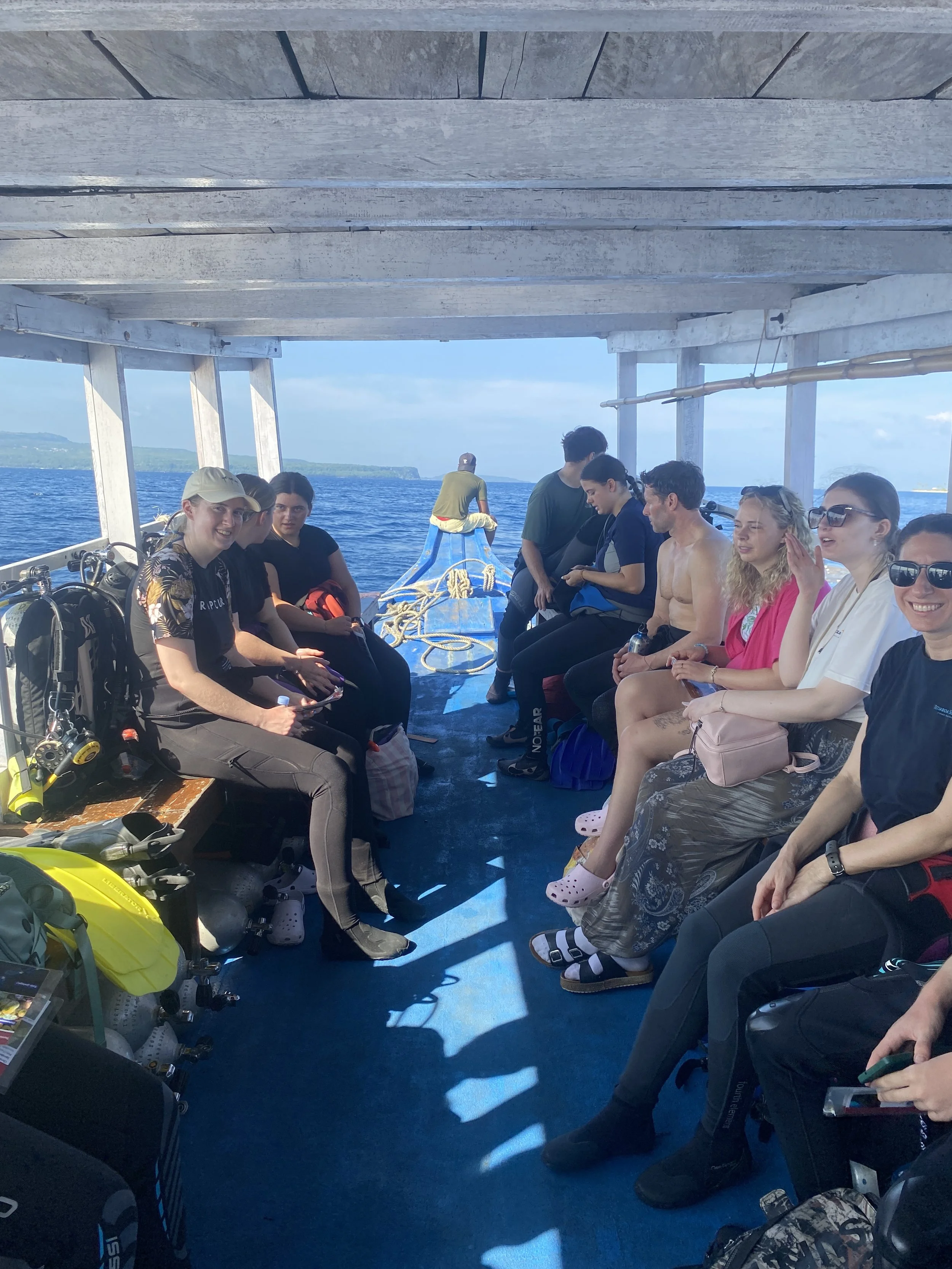
Dive tourism partnerships integrating ocean literacy into responsible dive experiences
Wellness and health practitioners exploring the links between ocean health, blue spaces, and human wellbeing
Artists and storytellers using creativity to communicate ocean science and inspire cultural change
Policy and government partners embedding ocean knowledge into strategy and decision-making
Coastal communities building resilience through sustainable tourism and conservation leadership
By connecting ocean science with local action, these programmes help build resilient communities and strengthen the relationship between people and the ocean.
Become an Ocean Literacy Facilitator
The Ocean Literacy Project grows through a network of trained facilitators who deliver Ocean Literacy programmes in their own professional and regional contexts.
Inspired by proven models in climate and sustainability education, facilitators are equipped to deliver high-quality, sector-relevant Ocean Literacy learning that builds understanding, confidence, and meaningful action across communities and professions.
This distributed approach enables Ocean literacy to scale globally while remaining locally relevant, connecting ocean science with the places, sectors, and decisions that shape our future.